
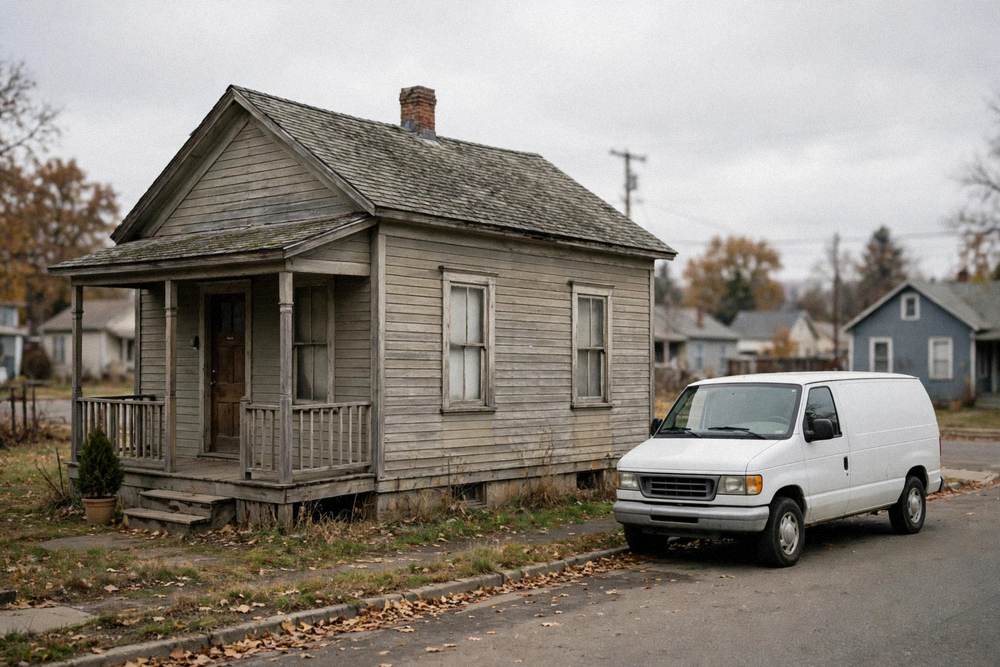
Downtown Nampa has the oldest homes in the city, and the oldest water heaters. Brick storefronts and Victorian era houses sit near the Nampa Depot and the Farmers Market. Behind the charm, the pipes are old and the tanks are old. This guide covers what a downtown Nampa historic homes water heater looks like, what breaks, and what to check.
The Oldest Homes in Nampa
Nampa's original townsite holds Victorian era homes, craftsman bungalows, and early twentieth century houses on tree lined streets. The Jacob P. Lockman House at 23 9th Ave N was built in 1906 for a Danish immigrant who owned a brewery in Nampa. It is an American Foursquare style house, and it has sat on the National Register of Historic Places since July 27, 2005. Houses from the 1930s still sell downtown too, like the 1930 home on 17th Ave S and the 1936 Victorian on N Yale St, both listed in November 2026.
These homes were built when Nampa was a railroad and farm town, not a suburb. The lots are small, the streets are narrow, and the houses sit close together. The plumbing was built to match. Supply pipes were galvanized steel. Drain pipes were cast iron. The water heater sat in a basement or a small closet, and it stayed there for decades. Many downtown homes still run on parts of that original system, patched and added to over a hundred years.
About 26 percent of Nampa homes were built before 1980, and the median home in the city was built in 2000. Downtown pulls that average down. The homes near the center are the oldest in the city, and their heaters are the oldest too. A downtown tank that is 12 years old is not unusual.
Galvanized Pipes: The Hidden Problem
Galvanized steel was the standard water supply pipe in homes built before the 1960s. The pipe is steel dipped in molten zinc, and the zinc coating was meant to stop rust. Trade guides put galvanized pipe life commonly at 40 to 50 years, though figures vary and no government source gives one number. After that, the zinc wears away, the steel rusts from the inside, and the pipe narrows with rust and mineral scale until the flow chokes off. A galvanized pipe looks dull gray or silver, with threaded fittings and a rough surface. You will find it in downtown basements, in crawl spaces, and behind walls that have never been opened.
Galvanized pipes hurt a water heater in three ways. First, the rust and scale inside the pipes break loose and travel into the tank, where they settle as sediment and coat the bottom. Second, the narrowed pipes cut water pressure, so the shower runs weak even when the heater works fine. Third, the rust shows up in the hot water first, because hot water pulls rust off the pipe walls faster than cold water does. Rusty hot water in a downtown home usually means rusty pipes, not just a rusty tank. Our rusty water page explains how to tell the two apart.
Cast iron drain pipes cause their own trouble. Cast iron was the standard drain material in the same era, and it rusts from the inside and can collapse underground. That is a drain problem, not a water heater problem, but the two meet in the same basement. A downtown home with cast iron drains and a 12 year old tank needs both checked at the same time.
Lead is the third old material, and it matters most in the oldest homes. Very old homes may still have a lead service line bringing water in from the street, or lead in old solder and fixtures. Lead in drinking water is a health risk, and it is worth a test before you buy an old downtown home. If the test finds lead, the fix is a pipe replacement, not a water heater.
Modern homes run on PEX and copper. PEX is plastic tubing that does not rust and does not scale. Copper lasts decades and does not rust. A downtown home that has been repiped with PEX or copper has solved the pipe problem, and the water heater will last longer for it. If the home still runs on galvanized pipe, budget for a repipe in the next few years.
What Breaks Most in a Downtown Nampa Historic Homes Water Heater
Sediment is first, and downtown water makes it worse. Nampa water runs from none to 7.08 GPG in hardness, based on the City of Nampa 2024 Consumer Confidence Report. That is hard enough to leave scale inside a tank. In a downtown home, the scale comes from two places: the hard water and the rust breaking off old galvanized pipes. The two mix in the bottom of the tank, and the tank pops and rumbles. A tank flush runs $75 to $250 nationally (HomeGuide, 2026). A tankless descale runs $75 to $300 nationally (HomeGuide, 2026). Once a year is the schedule we give every Nampa home, and downtown homes need it more, not less.
The anode rod is second. It is a metal rod inside the tank that rusts so the tank does not. It should be checked every 3 to 4 years, based on US Department of Energy guidance. In a downtown home, the rod works harder because the water carries rust and scale, and it wears out faster. When the rod is gone, the tank rusts from the inside out. A tank lasts 8 to 12 years, based on the US Department of Energy. A downtown tank with no anode rod check will fail at the short end of that range, and it will fail by leaking, not by slowing down.
The TPR valve is third. The temperature and pressure relief valve opens at 150 psi or 210 degrees F. It must have a discharge pipe that ends within 6 inches of the floor, with no valve, cap, or smaller pipe in the line. It must not drip. In a downtown basement, the TPR discharge pipe often runs into a floor drain that nobody looks at, and a drip can run for months before anyone notices. Check it every 6 months, based on US Department of Energy guidance.
Venting is fourth, and it is the one that can hurt people. A gas tank needs a vent that carries exhaust gas out of the house, going up with a steady slope, with no sag, gap, or rust hole. Downtown basements have old vents, and old vents rust through. Bad venting can let carbon monoxide, a gas with no smell, back into the house. A gas unit in a garage must sit 18 inches above the floor. If the vent looks rusty, sagging, or patched with tape, do not run the heater until someone checks it.
The pilot light and thermocouple come fifth. The thermocouple is the small safety sensor in the pilot flame. When it wears out, the pilot will not stay lit. A thermocouple replacement runs $100 to $325 nationally (HomeGuide, 2026). Drafts make it worse. An old downtown basement is drafty, and a cold wind through a cracked window can blow a weak pilot out. Our pilot light will not stay lit guide walks through that fix.
Repair or Replace: The 50 Percent Rule in an Old House
Old houses make the repair or replace question harder, because the heater is old and the pipes are old too. Use the 50 percent rule. If the repair quote is more than half the cost of a replacement and the heater is past half its expected life, replace it. A tank lasts 8 to 12 years, based on the US Department of Energy, so half its life is 4 to 6 years. On a 12 year old tank with a bad gas valve quoted at $550 nationally, that rule says replace. On a 5 year old tank with a bad element quoted at $200 nationally, that rule says repair. Our repair or replace guide walks through the same decision.
A tank replacement runs $600 to $3,100 installed nationally (HomeGuide, 2026). A tank swap takes 3 to 5 hours. A tankless install runs $1,400 to $5,600 nationally (HomeGuide, 2026), and a tankless unit lasts 15 to 20 years, based on the US Department of Energy. A tankless unit fits a downtown home well when the house has a gas line that can feed it, but the conversion needs a gas line check and a vent check first. An old downtown gas line may be too small for a tankless burner, and the vent may need a new run.
A repair runs $150 to $750 nationally, with an average near $450 (Fixr, updated August 29, 2025). An element replacement runs $100 to $350 nationally (HomeGuide, 2026). A thermostat replacement runs $100 to $350 nationally (HomeGuide, 2026). These are national figures, not Nampa prices. Get a written quote for your house before you decide.
One more downtown rule: fix the pipes with the heater, or the new heater will fail early. If the pipes are galvanized and the tank is dead, ask us about the repipe at the same time.
Winter in a Downtown Home
Nampa gets 132 freezing nights a year, based on NOAA data for 1991 to 2020, with a January average low of 23 degrees F. The cold season runs November 19 to February 18. Downtown homes feel winter harder than new subdivisions do. Old walls are thin. Old windows leak air. Basements stay cold. Pipes in an unheated basement or crawl space freeze, and a frozen pipe can burst and flood a house.
Keep the heat on when you leave the house. Set the thermostat to at least 55 degrees. Open the cabinet doors under sinks on outside walls so warm air reaches the pipes. Let a tap drip on the coldest nights. Insulate the pipes in the basement and the crawl space. A little pipe insulation costs less than one burst pipe.
If you come back from a trip to no hot water, check the pilot light first on a gas tank. A draft can blow it out. If the pilot will not stay lit, the thermocouple may have failed. If the tank is leaking, shut off the water at the valve above the tank, shut off the gas or the breaker, and call us. Our winter water heater failures guide covers the full cold weather list.
Buying a Downtown Home: The Heater Check
Downtown homes sell on charm, and buyers look at the kitchen and the porch. Check the water heater too. It takes ten minutes, and it can save you a replacement in your first year.
Find the rating plate on the side of the tank. The first four digits often give the month and year it was built. A tank lasts 8 to 12 years, based on the US Department of Energy. If the tank is 11 years old, ask the seller when it was last flushed and when the anode rod was last checked. If the seller cannot answer, budget for a replacement.
Look at the pipes. Gray or silver pipe with threaded fittings is galvanized steel. Copper is reddish brown and smooth. PEX is plastic tubing, often red for hot and blue for cold. If the supply pipes are galvanized, ask when they were last checked for rust and flow. Run the hot tap for a minute and watch for rusty water and weak pressure. Both point at galvanized pipes narrowing with rust.
Look at the vent. A gas tank needs a vent that runs up with a steady slope, with no sag, gap, or rust hole. Look at the floor around the tank for rust stains and wet spots. Look at the TPR valve discharge pipe and check it ends within 6 inches of the floor. Ask where the main water shutoff sits, and where the gas shutoff sits.
Frequently Asked Questions
How do I know if my downtown home still has galvanized pipes?
Look at the pipes in the basement or crawl space. Galvanized steel looks dull gray or silver, with threaded fittings and a rough surface. Copper looks reddish brown and smooth. PEX is plastic tubing, often red for hot water and blue for cold. If the pipes are galvanized and the house was built before the 1960s, assume they are near the end of their life and ask a plumber to check the flow and the rust.
Does rusty hot water mean I need a new water heater?
Not always. Rusty hot water can come from the tank, or it can come from old galvanized pipes. Run the cold tap first. If the cold water runs clear and the hot water runs brown, the problem is likely in the tank. If both run brown, the problem is likely in the pipes. Our rusty water page explains how to tell the two apart.
Should I replace my tank with a tankless unit in a downtown home?
A tankless unit fits a downtown home when the house has a gas line that can feed it and a vent path that works. It needs a gas line check and a vent check first. An old downtown gas line may be too small for a tankless burner. A tankless install runs $1,400 to $5,600 nationally (HomeGuide, 2026). A tankless unit lasts 15 to 20 years, based on the US Department of Energy, but it needs a descale once a year in Nampa hard water.
What is the first thing to check when an old downtown heater quits?
Check the age from the serial number first. A tank lasts 8 to 12 years, based on the US Department of Energy. Then check the breaker for an electric tank, and the pilot light for a gas tank. If the tank is leaking, shut off the water at the valve above the tank, shut off the gas or the breaker, and call us. Do not open the gas valve or work on the burner yourself.
Call Nampa HeatPros for Downtown Nampa Historic Homes Water Heaters
Downtown homes have the most character in Nampa, and the oldest plumbing too. We check the pipes, the vent, the tank, and the parts, then we give a written price before we start. Water heaters are all we do, and we do them in Nampa. If your downtown home has rusty water, a leaking tank, or a pilot light that will not stay lit, call us and we will get the hot water back the same day.
Our Service Area
We serve Nampa and the towns around it. Pick your area to see water heater repair there.