
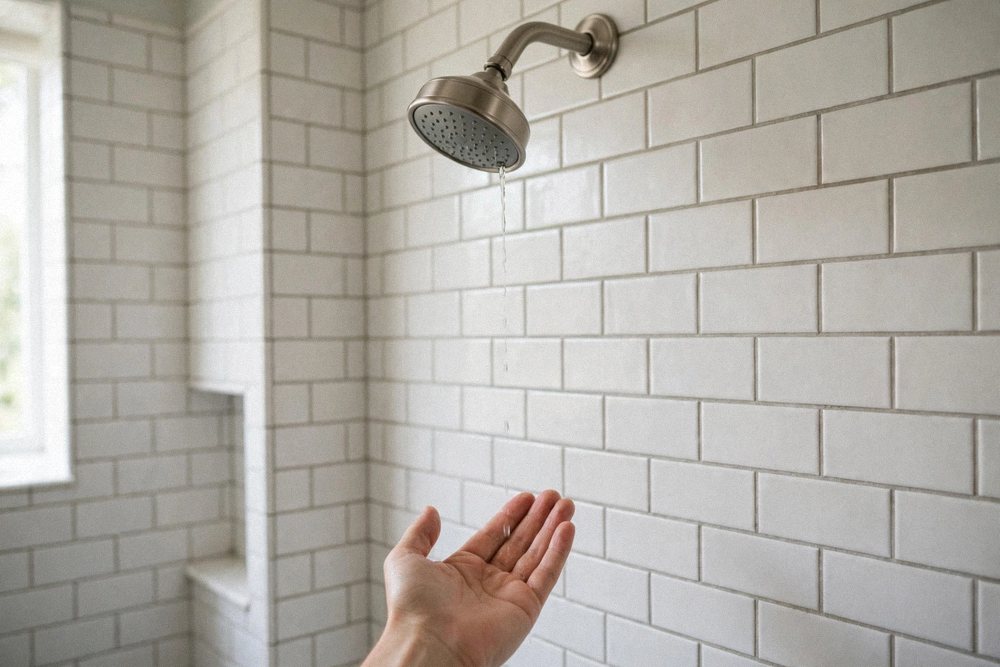
The shower runs weak, but the cold tap runs strong. Or the hot water trickles at every tap in the house. Both are low hot water pressure, and they point to different causes. The first check takes one minute, and it tells you where the fault sits.
Turn on a hot tap and a cold tap at the same sink. If the cold water runs strong and the hot water runs weak, the fault is in the water heater or the hot water pipes. If both run weak, the fault is in the main line, the pressure regulator, or the city supply. That one test splits the whole problem in half, and it is the test we start with on every low pressure visit in Nampa, ID.
Low Hot Water Pressure in Nampa, Idaho: The First Check
Low hot water pressure means the hot water comes out slower than it should. Normal home water pressure runs 40 to 80 PSI, and about 60 PSI is the sweet spot. Below 40 PSI at the tap, the shower feels weak and the tub fills slowly. Above 80 PSI, the pressure strains pipes and fittings, so never set a regulator past 80 PSI.
Run the hot and cold test above. Then check one tap against the rest of the house. If one shower is weak and the rest are fine, the fault is at that fixture, usually a clogged showerhead or aerator. If every hot tap is weak, the fault is at the heater or in the hot water pipes. If every tap, hot and cold, is weak, the fault is before the heater.
Write down what you find before you call. Hot only, or hot and cold, and one tap or every tap. Those two answers tell us what to bring.
What Causes Low Hot Water Pressure?
The cause is almost always a restriction somewhere between the main line and the tap. Here are the ones we find most in Nampa.
Sediment and Hard Water: The Nampa Cause
Nampa water runs none to 7.08 grains per gallon, based on the City of Nampa 2024 report. That is hard enough to leave scale in every tank in town. Scale settles at the bottom of the tank, coats the heating element, and narrows the hot water outlet. Over years, the flow path closes down, and the pressure at the taps falls.
A flush clears the sediment. We drain the tank, flush it until the water runs clear, and check the anode rod while we are there. A tank that is flushed once a year keeps its pressure. A tank that is never flushed loses pressure a little every year, and the heater works harder for less hot water. If the flush does not bring the pressure back, the restriction is in the pipes, not the tank, and we say so.
A Failing Dip Tube
The dip tube is a plastic pipe inside the tank. Cold water enters through it and drops to the bottom of the tank, where the burner or the element heats it. Hot water leaves from the top. That is the whole design, and it only works if the tube is sound.
When the tube cracks or breaks off, cold water dumps straight into the top of the tank. The hot water mixes with cold water before it leaves, so the shower runs lukewarm and weak at the same time. The heater itself is fine. The tube is not.
A dip tube is a tank top job. We shut off the water and the power or gas, pull the old tube, and fit a new one. It is a small part and a short visit. If the tank is over 10 years old and the tube has failed, we check the anode rod and the tank lining too, because a failing tube on an old tank often means the tank is near the end of its life.
The Pressure Regulator
The pressure regulator is a bell shaped brass valve on the main line, usually just inside where the water enters the house. It cuts city pressure down to the home range. City pressure can run 40 to 100 PSI. The regulator holds the house at 40 to 80 PSI, and about 60 PSI is where most homes feel right.
A regulator fails in two ways. It fails closed, and pressure drops at every tap. That is the most common failure. Or it fails open, and pressure climbs past 80 PSI, which strains pipes, fittings, and the water heater relief valve. A regulator lasts 10 to 15 years. If yours is past that age and the pressure is low at every tap, the regulator is the first thing we test.
A regulator can be adjusted, but only within its range, and never past 80 PSI. If the adjustment does not hold, the regulator needs replacing. That is a main line job, and it takes one visit.
Old Homes and Galvanized Pipe
About 26 percent of Nampa homes were built before 1980, and the median Nampa home was built in 2000. The older homes in downtown Nampa often still have galvanized steel pipe. Galvanized pipe lasts 40 to 50 years, on trade guide figures, and it rusts from the inside out. The rust narrows the pipe a little every year, and hot water lines go first.
A house with galvanized pipe and low hot water pressure usually has two problems at once: sediment in the tank and narrowing in the pipes. A flush fixes the tank half. The pipes need a different fix. We test the pressure at the heater and at the farthest tap. If the pressure is fine at the heater and weak at the tap, the pipes are the restriction. A short run of new pipe fixes one bathroom. A whole house repipe fixes all of it, and it is the right call when the pipe is past 50 years old.
What We Check on a Low Pressure Visit
A low pressure visit runs in order, from the street to the tap.
We tell you what we found before we fix anything, and we give you an upfront written price. If the fix is a valve or a screen, we do it on the spot. If it is a regulator or a pipe run, we book it and tell you the price first.
When Low Pressure Is an Emergency
Low pressure alone is not an emergency. Low pressure with water on the floor is. If the pressure drops suddenly and you see water around the heater, shut off the cold water supply at the heater, turn off the power or gas, and call us. A burst pipe or a leaking tank can flood a room in an hour.
No water at all is also a call now job. If every tap in the house runs dry, the fault is a closed main valve, a failed regulator, or a city main break. Check the main valve first. If it is open and there is still no water, call us, and check with the neighbours. If the whole street is dry, it is the city.
Frequently Asked Questions
Why is my hot water pressure low but my cold water pressure fine?
The fault is in the water heater or the hot water pipes. Sediment in the tank, a half closed inlet valve, or a failing dip tube are the usual causes. Check the inlet valve first. If it is fully open, the tank needs a flush and a dip tube check.
Can a water heater cause low water pressure?
Yes, for hot water only. Sediment, a failing inlet valve, or a broken dip tube can all restrict hot water flow. If the cold water is weak too, the fault is before the heater, in the main line, the regulator, or the city supply.
How do I fix low hot water pressure myself?
Check the cold water inlet valve at the top of the heater and make sure it is fully open. Pull the aerators at the weak taps and clean the screens. If that does not bring the pressure back, the tank needs a flush, and that is a visit.
Does hard water cause low water pressure?
Yes. Scale from hard water settles in the tank and narrows the hot water outlet, and it clogs aerators and showerheads. Nampa water runs none to 7.08 grains per gallon, so every tank in town builds scale. A yearly flush is the fix.
Our Service Area
We serve Nampa and the towns around it. Pick your area to see water heater repair there.