
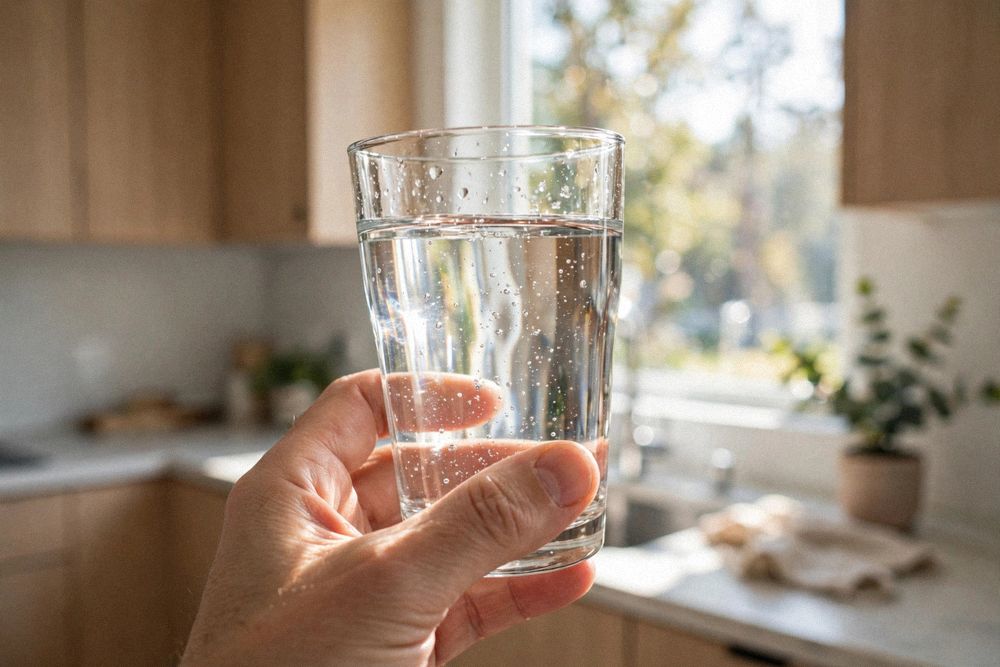
Nampa water hardness ranges from none to 7.08 grains per gallon. That figure comes from the City of Nampa's own 2024 Consumer Confidence Report, the annual water quality report the City must publish. This page explains what that number means, why other figures you see online differ, and what hard water does to your water heater.
What the City Report Says
Every year the City of Nampa publishes a Consumer Confidence Report, called a CCR. It is the City's official report on the drinking water it delivers, required under the federal Safe Drinking Water Act. The 2024 report answers the question "Is my water hard?" in one line: City of Nampa water hardness level ranges from none to 7.08 grains of hardness per gallon.
Grains per gallon, shortened to GPG, is the unit plumbers use for hardness. It measures the calcium and magnesium dissolved in the water. The City report also gives the classification the US Department of the Interior and the Water Quality Association use:
Soft water is 0 to 1 grains per gallon. Slightly hard is 1 to 3.5. Moderately hard is 3.5 to 7.0. Hard is 7.0 to 10.5. Very hard is above 10.5.
Nampa's top figure of 7.08 grains sits just inside the hard range. But the range matters as much as the top number. The City does not publish one hardness number for the whole city, because the number changes by area. Nampa's water comes entirely from city wells in the western Snake River Plain Aquifer, and different wells feed different parts of town. A home fed by one well can sit near the soft end of the range while a home two miles away sits near the hard end. That is why one Nampa neighbour swears their fixtures scale constantly and another barely notices it.
In 2024 the City of Nampa Waterworks Division took about 1,200 water samples and monitored over 75 contaminants as required by the EPA and the Idaho Department of Environmental Quality, known as IDEQ. The report covers disinfectant byproducts and organic, inorganic, microbiological, and radioactive contaminants. All results in the report are for 2024 unless otherwise noted.
Why Other Figures Differ
If you search for Nampa hardness online, you will see different numbers. Here is why, and which figure this site uses.
One secondary source gives an average of 3.6 grains per gallon. Another gives a county estimate of 9.9 grains per gallon. A third gives 7.08 grains per gallon, or 121 parts per million, and calls Nampa water hard. Parts per million, shortened to ppm, is the other common unit for hardness. One grain per gallon equals 17.1 parts per million, so 7.08 grains per gallon works out to about 121 parts per million.
These figures differ because they measure different things. An average blends soft wells and hard wells into one number. A county estimate covers a wider area than the city. A single top figure is the hardest water the City reports, not the water at every tap.
This site uses the City's own range, none to 7.08 grains per gallon, because the City report is the primary source. It is the City's own testing, published by the City, for the City's own water. A secondary site quoting an average or a county estimate cannot beat that. When a water heater page on this site talks about Nampa hard water, it means that range.
One more note: the number of city wells is stated differently in different places. One Nampa plumber page says 14 wells. Another says 17 wells. The City report does not settle it in the text we read. This page does not state a well count, because the sources conflict.
What Hard Water Does to a Water Heater
Hard water is not a health hazard at these levels. It is a heater hazard. The minerals in hard water come out of solution when water heats, and they settle as scale.
In a tank water heater, scale coats the bottom of the tank and the heating element. A gas burner has to heat through that scale, so the tank heats slow and uses more gas. An electric element buried in scale overheats and burns out early. Scale also makes the popping and rumbling noise many Nampa homeowners hear, as steam bubbles form under the scale layer and break free. Over years, scale shortens the life of the tank and can crack the glass lining, which leads to rust and leaks.
In a tankless water heater, scale coats the heat exchanger, the narrow passages where water picks up heat. A scaled heat exchanger heats slow, flows less water, and trips error codes for overheating or flame loss. Tankless makers call for yearly descaling, and in Nampa water that schedule is not optional. A tankless unit in soft water can go longer between descales. A tankless unit in Nampa water cannot.
Scale also wears out the parts around the heater. The anode rod, which protects the tank from rust, works harder in mineral heavy water. The temperature and pressure relief valve can stick. Aerators and shower heads crust over. None of this happens in a week. It builds up over years, and by the time the heater fails, the scale is part of the cause.
The effect is worse at the hard end of the range. A home near 7 grains per gallon builds scale far faster than a home near 1 grain. That is why two identical heaters in two Nampa neighbourhoods can live very different lives.
What You Can Do About Nampa Hard Water
You cannot change the City water. You can change what it does to your heater.
First, flush the tank every year. Flushing drains the sediment and scale from the bottom of the tank. A national guide puts a tank flush at 75 to 250 dollars, and a tankless descale at 75 to 300 dollars. Those are national figures, not Nampa prices. Our flushing page at /water-heater-flushing-nampa-id/ explains the job, and our descaling page at /tankless-water-heater-descaling-nampa-id/ covers tankless units.
Second, descale a tankless unit every year. The heat exchanger is the most scale sensitive part in the home, and a yearly descale keeps it flowing and heating right.
Third, check the anode rod every three to four years, as the US Department of Energy recommends. The anode rod is a sacrificial rod that rusts so the tank does not. In hard water it wears faster. A worn out rod means the tank starts rusting. Our anode rod page at /anode-rod-replacement-nampa-id/ explains the job.
Fourth, test your own water. A home test kit with test strips gives a quick reading, and a test at a water treatment shop gives a precise number in grains per gallon. Test before you buy a softener, because a softener must be sized to your measured hardness. A softener sized for 7 grains is wrong for a home at 2 grains, and the other way round.
Fifth, consider a water softener if your water sits at the hard end of the range. A softener removes calcium and magnesium before the water reaches the heater. It is the only fix that stops scale at the source. It costs money up front and needs salt and upkeep, so get your measured hardness first and size it right.
What This Means for You
Nampa water is moderately hard to hard, depending on where you live. The City's own report says none to 7.08 grains per gallon. That range is the number to trust, because it comes from the City's own testing.
If your heater pops, heats slow, or fails early, hard water is likely part of the story. Yearly flushing and descaling, a checked anode rod, and a softener sized to your measured hardness are the defences that work. Read our maintenance page at /water-heater-maintenance-nampa-id/ for the full yearly schedule.
Questions About Nampa Water Hardness
Is Nampa water hard?
It depends on where you live. The City of Nampa 2024 Consumer Confidence Report puts hardness from none to 7.08 grains per gallon. The top of that range is classed as hard. Homes fed by harder wells build scale faster than homes fed by softer wells.
How hard is 7.08 grains per gallon?
On the scale the City report uses, 7.0 to 10.5 grains per gallon counts as hard. So 7.08 grains is just inside the hard range. In parts per million, that is about 121 ppm. For comparison, soft water is 0 to 1 grain per gallon.
Does hard water shorten a water heater's life?
Yes. Scale coats the tank bottom and the heating element in a tank heater, and the heat exchanger in a tankless unit. The heater works harder, heats slower, and wears out sooner. Yearly flushing and descaling, and a checked anode rod, slow that wear down.
Do I need a water softener in Nampa?
Not every home does. It depends on your measured hardness. Test your water first. If your water sits at the hard end of the range, a softener sized to your measured hardness stops scale at the source. If your water is near the soft end, flushing and descaling may be enough.
Know Your Water Before You Buy
Hard water is the quiet cause behind many Nampa water heater failures. The City's own report gives you the number: none to 7.08 grains per gallon. Test your tap, flush your tank, descale your tankless unit, and check your anode rod. If your heater is popping, heating slow, or running out fast, read our problem pages, starting with no hot water at /no-hot-water-nampa-id/ and sediment buildup at /water-heater-sediment-buildup-nampa-id/.
Related Reading
Our Service Area
We serve Nampa and the towns around it. Pick your area to see water heater repair there.