
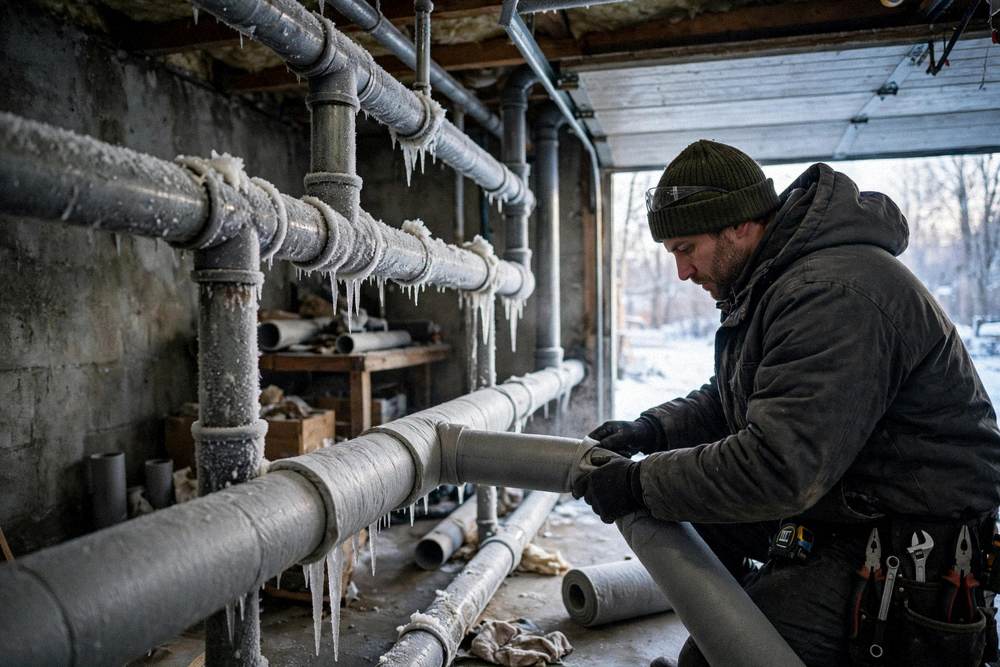
Freezing winters in Nampa test every water heater in a garage or a crawl space. Nampa sees 132 freezing nights a year, based on NOAA 1991 to 2020 normals, and the cold season runs November 19 to February 18. Cold inlet water, frozen pipes, and burst fittings are the winter risks, and a fall check up stops most of them.
How Freezing Winters Strain a Nampa Water Heater
Nampa averages 132 freezing nights a year, based on NOAA 1991 to 2020 normals from the Nampa Sugar Factory station. A freezing night is a night when the air drops to 32 degrees Fahrenheit or below. January averages a low of 23 degrees Fahrenheit. The cold season runs from November 19 to February 18. That is three months when a water heater in a cold spot can freeze.
A water heater in a heated utility room rarely freezes. The house heat keeps the air around it above freezing. A water heater in an unheated garage, a crawl space, or an outside closet has no such protection. Cold air blows in through vents, gaps, and cracks, and the air around the tank drops below freezing. The water inside the tank and the pipes stays warm only as long as the burner or the elements keep firing. On a cold night with no hot water use, the tank cools, and the pipes cool faster than the tank.
Cold Inlet Water: Why Winter Showers Run Short
Winter does not only threaten a freeze. It also cuts hot water. The water that comes into the house in January is far colder than the water that comes in during July. A tank heater must heat that cold water up to 120 degrees Fahrenheit, and a tankless unit must do the same job as the water flows through. Cold inlet water means the heater works harder and longer for every shower.
A tank that fills a tub in summer may run cold halfway through in winter. A tankless unit sized for summer inlet water may not keep up in January. The fix is not always a new heater. A flush helps a tank that is full of scale, because scale already cuts capacity. A descale helps a tankless unit the same way. If the heater is clean and still runs short in winter, the size is the problem, and a larger tank or a larger tankless unit is the fix.
Frozen Pipes: The First Thing to Freeze
The pipes freeze before the tank. The inlet pipe and the outlet pipe hold less water than the tank, and they sit closer to cold air. When water in a pipe freezes, it expands. The ice blocks the pipe, so no water flows. The pressure builds behind the ice, and the pipe can crack or burst. The leak often stays hidden until the ice thaws, and then water pours out of the crack.
The signs of a frozen pipe are simple. A tap that gives no water at all, or only a trickle, when the rest of the house has water. A strange noise from the wall when the tap opens. Frost or damp on a pipe near the heater. If a pipe has frozen, turn off the water at the main shutoff and open the taps to take pressure off the line. Thaw the pipe slowly with warm towels or a hair dryer on low heat. Never use a torch or an open flame. Fast heat cracks pipes and starts fires.
Tankless Units Freeze First
A tankless unit freezes faster than a tank. It holds only a small amount of water inside a narrow heat exchanger, and that water cools fast when the air drops. Maker manuals warn that an unprotected tankless unit can freeze when the air near it drops close to freezing, even near 30 to 32 degrees Fahrenheit. An outside mounted unit is at the most risk. A unit in an unheated garage is next.
Most tankless units have a built in freeze guard, a small heater that warms the exchanger when the power is on. The guard works only while the unit has power. A power cut on a freezing night leaves the unit with no protection, and that is when most tankless freeze damage happens. The condensate drain on a condensing tankless unit can freeze too. When the drain blocks with ice, the unit shuts down and throws an error code. Keep the condensate line short, sloped, and inside the heated part of the house where you can.
What to Do When the Heater Freezes
If the heater has frozen, do not run it. Turn off the power at the breaker for an electric unit, or turn the gas valve to pilot for a gas unit. Turn off the cold water supply to the heater. Running a frozen heater can burn out the elements, crack the tank, or start a fire.
Thaw the pipes first, not the tank. The pipes freeze first, and thawing them restores flow. Use warm towels or a hair dryer on low heat, and work from the tap back toward the heater. Once water flows again, look for leaks at every joint and valve. A pinhole leak under pressure turns into a burst pipe fast. If the tank itself has split, the heater needs a replacement. A tank lasts 8 to 12 years, based on the Department of Energy, and a split tank is past repair at any age. If the tank looks sound and holds water after a thaw, have a plumber check the valves and the heating parts before you turn it back on.
The Fall Check Up: Get Ready Before November 19
The cold season starts November 19, so the check up belongs in October or early November. A fall check up covers the jobs that stop winter damage. Insulate the pipes near the heater with foam sleeves, hot and cold lines both. The pipes are the first thing to freeze, and foam sleeves are the cheapest protection you can buy.
Check the vent on a gas unit. A blocked vent spills exhaust into the house and wastes heat. Check the anode rod every 3 to 4 years, based on the Department of Energy. A tank with no anode rod check fails early, and winter is when it fails. Flush the tank. Nampa water runs from none to 7.08 grains per gallon in hardness, based on the City of Nampa 2024 Consumer Confidence Report, and a tank full of scale heats slowly on a cold morning. Descale a tankless unit once a year, before the cold arrives.
Seal the gaps around the garage door and the vents near the heater. Cold air blowing straight onto a tank or a pipe freezes it faster than still cold air. If the house will sit empty in winter, set the thermostat to 55 degrees Fahrenheit as a freeze protection step, drain the pipes if you leave for a long time, and never turn the water heater off and leave it full of water in freezing weather. A heater that stays on keeps its own water warm.
Winter Costs: What a Freeze Can Cost
A burst pipe can send hundreds of gallons of water into a garage or a utility room before anyone notices. The water damage costs far more than the pipe repair. A split tank means a full replacement, and a tank replacement runs $600 to $3,100 installed nationally, based on HomeGuide 2026. A tankless replacement runs $1,400 to $5,600 installed nationally, based on HomeGuide 2026. A frozen heat exchanger on a tankless unit runs $600 to $1,300 nationally, based on HomeGuide 2026.
A fall check up costs far less than any of those figures. A tank flush runs $75 to $250 nationally, based on HomeGuide 2026, and a tankless descale runs $75 to $300 nationally, based on HomeGuide 2026. Those are national figures, and Nampa prices are not yet confirmed, so get a written price before we start. Pipe insulation costs a few dollars a length at a hardware store, and it is a job most homeowners can do in an afternoon.
Questions Nampa Homeowners Ask About Freezing Winters
Can a water heater freeze in Nampa?
Yes. Nampa sees 132 freezing nights a year, and a heater in an unheated garage or crawl space can freeze when the air around it drops below 32 degrees Fahrenheit for long enough. A heater in a heated room rarely freezes. Keep the heater on through cold snaps, and insulate the pipes near it.
Why does my water heater run out of hot water in winter?
Cold inlet water is the main cause. Winter water comes into the house far colder than summer water, so the heater works harder for every shower. Scale makes it worse, because a scaled tank or heat exchanger already heats slowly. A yearly flush or descale restores the capacity the heater has lost.
Should I turn my water heater off when I leave for winter?
No, not if you leave it full of water. A heater that stays on keeps its own water warm and resists freezing. If the house will sit empty for a long time, drain the heater and the pipes, and set the thermostat to 55 degrees Fahrenheit as a freeze protection step. Never leave a full heater off in freezing weather.
What should I do first if my pipes freeze?
Turn off the water at the main shutoff and open the taps to take pressure off the line. Thaw the frozen pipe slowly with warm towels or a hair dryer on low heat, working from the tap back toward the heater. Never use a torch or an open flame. Once water flows, check every joint for leaks.
Winter in Nampa starts November 19, and the check up belongs before it. Ask Nampa HeatPros for a fall check up, and we will flush the tank, descale the unit, insulate the pipes, and tell you in plain words whether your heater is ready for freezing winters in Nampa. Our emergency repair page covers what to do when the heat stops on a cold night, our Nampa winters blog walks through the 132 freezing nights in full, and our fall check up blog gives the full October list.
Our Service Area
We serve Nampa and the towns around it. Pick your area to see water heater repair there.