
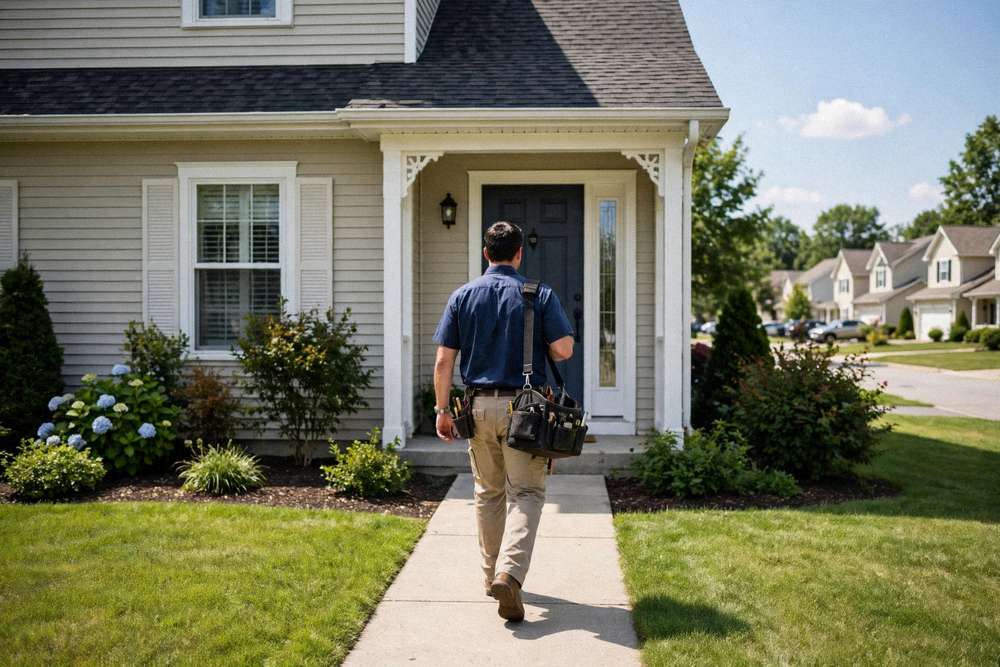
Summer is the easy season for a water heater in Nampa, and that is exactly why it gets ignored. The heater does not freeze, the pipes do not burst, and the cold inlet water runs warmer than it does in January. So nobody looks at the tank until it leaks in August, or until the family comes home from a trip to cold showers and a dead pilot light.
A summer water heater check in Nampa takes one visit. It covers the flush, the relief valve, the temperature setting, and the vacation setting if you are leaving town. Do it in June, before the heat peaks, and the heater runs clean all summer.
Nampa Summer, in Numbers
July is the hottest month in Nampa, with an average high of 91 degrees F and an average low of 59 degrees F, based on WeatherSpark climate data. From June 13 to Sept 10, the daily high averages above 81 degrees F. That is a long warm stretch, and it is the stretch when the heater works least hard, because the water coming into the house is already warm.
Warm inlet water is good news for every heater type. A tank unit heats less to reach 120 degrees F. A tankless unit works less hard for the same shower. A heat pump unit pulls heat from warm air, which is its best season. The heater still needs care in summer, because hard water does not take the summer off. Nampa water runs none to 7.08 grains per gallon, based on the City of Nampa 2024 report, and scale builds in every tank in town, in July just as it does in January.
Set the Temperature to 120 Degrees for Summer
Many Nampa homes run the heater hotter in winter, because the cold inlet water makes the shower feel thin. That setting is easy to forget when summer comes. A heater left at a winter setting in July can scald, especially children and older adults, and it wastes energy heating water nobody needs that hot.
Set the temperature to 120 degrees F for summer. That is the DOE setting. It is hot enough for a shower, cool enough to cut scald risk, and low enough to save energy and slow scale. If the dial has no numbers, turn it to the middle mark and test the tap with a thermometer. If the water at the tap reads above 120 degrees F, turn it down a notch and test again.
Do not set the tank below 120 degrees F for a long stretch. Below that temperature, the risk of Legionella bacteria growth rises. A low setting saves a little energy and invites a bigger problem. 120 degrees F is the floor, not a suggestion.
Flush the Tank Before Summer
Summer is the best time to flush a tank, because the job is quick and the heater is not fighting cold inlet water. Scale from Nampa hard water settles at the bottom of every tank. A flush drains it out before it coats the heating element and cuts the heater output.
A tank that is flushed once a year keeps its pressure and its heat. A tank that is never flushed loses both a little every year. The flush also shows the state of the anode rod, the part that protects the tank from rust. If the rod is worn out, we replace it on the same visit. A heater that is flushed yearly reaches the top end of its life, 8 to 12 years for a tank. One that is never flushed can fail in as little as 5 years.
Book the flush in June. The days are mild, the garage is warm enough to work in, and a plumber can still book a visit on your schedule. Wait until August, and the same job competes with every other summer call.
Test the T&P Valve
The T&P valve is the safety valve on the side or the top of the tank. It opens at 150 psi or 210 degrees F, and it stops the tank from building pressure it cannot hold. A valve that has not been tested in years can stick shut, and a stuck valve is a risk.
Test it once a year. Lift the lever briefly and let it snap back. Water should run out of the discharge pipe, then stop. If no water comes out, or if it keeps dripping after the test, the valve needs replacing. A T&P valve costs $50 to $300 fitted, on national figures, and it is the cheapest safety part on the heater.
If the valve discharges on its own in summer, do not cap it and do not ignore it. A valve that opens on its own means the pressure or the temperature is too high, and the cause needs a visit. Test the valve before summer so a stuck valve does not wait until August to show itself.
Going Away? Set Vacation Mode
Most Nampa families leave town at least once in summer. The heater does not need to run at full temperature while the house is empty. Set vacation mode before you go, and the heater saves energy while you are away.
On a gas tank, turn the dial to VAC or Pilot. That keeps the pilot lit and the tank warm enough to stop bacteria growth, without heating water nobody uses. On an electric tank, flip the dedicated breaker off. On a tankless unit, use the vacation or power saving mode, and leave the power on so the freeze protection stays armed. On a hybrid heat pump unit, use the away mode, which lowers the setpoint and runs the heat pump only.
If you are away for a week or more, shut off the main water valve too. A leak in an empty house can flood a room before anyone notices, and the single best step before a trip is shutting off the main. If the trip runs past 30 days, shut off the main and check your home insurance, because many policies carry a vacancy clause at 30 to 60 days, and a claim can be denied if the water was left on.
Vacation mode on most gas valves holds the tank at about 50 to 60 degrees F. That is meant for an empty house with the water supply off, not for a house with people coming and going. If a house sitter will use the taps, leave the heater at 120 degrees F instead, and tell the sitter to run the hot tap for a minute before showering.
Coming Home: Turn It Back On the Right Way
Coming home to no hot water is normal after a trip, and it is an easy fix if the restart is done in order. Restore the water first. Let the tank refill completely. Then turn the heat back on.
That order matters most on an electric tank. If the heating elements turn on while the tank is empty, they dry fire and burn out in seconds. That is a dead heater on the first night home. Turn the breaker back on only after the tank is full and water runs steady from a hot tap.
On a gas tank, turn the dial back from VAC or Pilot to the normal setting, and give the tank 30 to 45 minutes to recover before you shower. On a tankless unit, turn the vacation mode off and run a hot tap for a minute. If the unit shows an error code after the restart, write it down before you call. Our fall check up covers the same restart steps for the cold season, when a wrong restart can freeze a pipe.
If Your Tank Is 8 Years Old, Summer Is the Time to Plan
A tank water heater lasts 8 to 12 years, on DOE figures. If yours is past 8 years, summer is the time to plan the replacement, not the time to hope it lasts one more winter. A tank that fails in August floods a garage. A tank that fails in January floods a garage and leaves the house with no hot water in a freeze.
Check the age on the rating plate on the side of the tank. The first four digits of the serial number usually hold the year and the week it was made. If the tank is past 10 years and it has started to rumble, leak a little at the base, or run out of hot water fast, put the money toward a new unit. Repair it if the fix costs less than half of a new unit and the heater is under 8 years old. That is the 50 percent rule, and it holds in summer just as it does in winter.
A planned replacement in summer is also cheaper to schedule. The plumber can book it on your day, pull the permit if one is needed, and fit the new unit without an emergency call out. An emergency replacement in a freeze costs the same parts plus the urgency.
Stampede Week and Summer Guests
The Snake River Stampede is Nampa's big summer rodeo, held each summer at the Ford Idaho Center, and it is one of the top 12 professional rodeos in the country. The week brings guests to Nampa homes, and guests mean more showers, more laundry, and more hot water than a normal week.
If you host family for Stampede week, check the heater before they arrive. A tank that is fine for two people can run out fast for six. Flush it, check the anode rod, and set the temperature to 120 degrees F. If the tank is past 10 years old and it already runs out fast on a normal day, a house full of guests will show it. Plan the replacement before the guests arrive, not after the first cold shower.
Tankless in Summer
A tankless unit likes summer. The water coming into the house runs warmer, so the unit works less hard to reach 120 degrees F, and the shower stays hot with less gas or electricity. That is the easy part.
The hard water part does not change. Scale coats the heat exchanger in summer just as it does in winter, and a scaled exchanger cuts flow and trips overheat codes. Descale a tankless unit once a year, and clean the inlet filter on the same visit. If the unit shows an error code in summer, read the code before you call. No ignition is Rinnai 11, Navien E003, and Takagi 111. Flame loss is Rinnai 12, Navien E012, and Takagi 121. Reset once, twice at most, and call if the code comes back.
Frequently Asked Questions
Should I turn off my water heater when I leave for the summer?
For a long trip, set vacation mode, not a full shutoff, unless you also shut off the main water supply. On a gas tank, turn the dial to VAC or Pilot. On an electric tank, flip the breaker off. Restore the water first when you return, let the tank refill completely, then turn the heat back on.
What temperature should my water heater be in summer?
120 degrees F. That is the DOE setting. It is hot enough for a shower and cool enough to cut scald risk and save energy. Do not set it below 120 degrees F for a long stretch, because the risk of Legionella bacteria growth rises below that temperature.
Does a water heater need maintenance in summer?
Yes. Flush the tank, test the T&P valve, and check the anode rod. Summer is the best time for the flush, because the heater is not fighting cold inlet water. A tank that is flushed once a year reaches the top end of its 8 to 12 year life.
Why does my water heater run out of hot water faster in summer?
It usually does not. Summer inlet water runs warmer, so a healthy heater should do better, not worse. If the shower runs out fast in July, the cause is usually sediment in the tank, a failing dip tube, or a heater that is past its life. Book a visit before it fails outright.
Call Nampa HeatPros Before Summer
Summer is the easy season to forget the heater, and the best season to look after it. A flush, a valve test, and a temperature check in June cost less than an emergency call in August. Book a summer check up before the heat peaks, and the heater will run clean until the first freeze.
Our Service Area
We serve Nampa and the towns around it. Pick your area to see water heater repair there.