
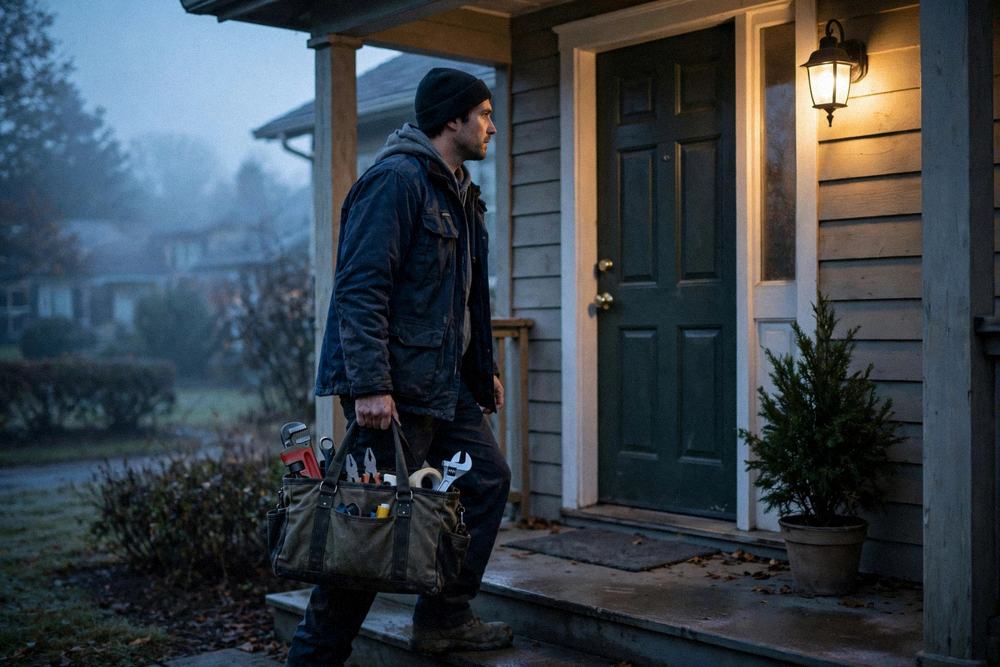
No hot water at night is miserable, but by itself it is usually not an emergency. A water heater emergency is something that can hurt you or damage your house right now: water pouring out of the tank, a gas smell near the unit, scalding water at the tap, or a relief valve discharging steam. No hot water with nothing leaking and no smell is a same day problem, and it can usually wait until morning without any extra damage. This guide explains what counts as a real emergency, what can wait, what to do tonight, and what an emergency visit costs.
What Counts as a Real Emergency
A real emergency starts the second the problem moves beyond no hot water and into one of four buckets: a safety hazard, water escaping where it should not, damage spreading into the house, or scalding water.
Water actively leaking from the tank body is an emergency. That usually means the steel inside has rusted through, not a loose fitting, and the leak only gets worse. Water spreads fast into flooring, trim, drywall, and insulation. Shut off the cold water supply valve on top of the heater, then cut the power at the breaker for an electric unit or turn the gas control to off for a gas unit. Our blog on leaking water heater what to do covers the first 10 minutes step by step.
A gas smell near a gas unit is an emergency. Leave the house right away and call your gas utility or 911 from outside. Do not flip any switches, do not use a phone inside, and do not try to relight the pilot. Natural gas is scented so you can smell it, and that smell means gas is escaping somewhere it should not be.
Scorch marks, melting, or a burning smell near the heater is an emergency. Shut it down and stop touching it. A breaker that trips and will not hold is an emergency too. Assume an electrical fault, not bad luck, and leave the breaker off.
Scalding water at the tap is an emergency. If the water comes out far hotter than the thermostat setting, the thermostat or the gas valve has stuck on, and the tank keeps heating. Stop using hot water, turn the heater off, and call. The relief valve should open at 150 psi or 210 degrees Fahrenheit, but do not rely on it. A stuck thermostat is a fault that needs a plumber the same night.
> If you smell gas, leave the house and call your gas utility or 911 from outside. Do not flip switches, do not unplug anything, and do not use a phone inside. Do not go back in until they say it is safe.
No Hot Water at Night: Can It Wait Until Morning?
For most homes, yes. No hot water with nothing leaking and no smell is uncomfortable, not dangerous, and it can wait for a normal appointment in the morning. A cold shower is an inconvenience. An active leak, a gas smell, or a fault that can start a fire is an emergency.
There are exceptions. If someone in the home depends on hot water for a medical reason, a baby who needs warm baths, an elderly person, or someone with a condition that needs hot water for care, then no hot water at night is an emergency for that household. Tell the plumber when you call, because that changes the priority.
A freezing night is another exception. Nampa sees 132 nights a year at or below freezing (NOAA 1991 to 2020), with a January average low of 23 degrees Fahrenheit. If the heater has failed and the pipes around it are exposed to freezing air, the water in the pipes can freeze and crack a fitting overnight. If the heater is in a garage or an unheated room and the temperature is dropping fast, shut off the water to the heater and open a hot tap to relieve pressure, then call. A frozen pipe is a different and more expensive fix than a failed element.
The honest reason most people want a night visit is not safety, it is the morning. Work, school, and showers all happen at 7 in the morning, and nobody wants to start the day cold. That is a fair reason to book a first appointment in the morning, and a same day morning visit usually costs less than a 2 a.m. dispatch. Emergency after hours rates run 125 to 170 dollars an hour plus a 150 to 250 dollar out of hours fee nationally (HomeGuide, 2026). A morning visit is charged at the normal rate. If nothing is leaking and nothing smells, waiting until morning saves money and loses nothing.
Before We Arrive: What to Do Tonight
If the heater has stopped making hot water at night and nothing is leaking, there are a few safe checks you can do before you call.
First, check the breaker once. An electric water heater runs on a double pole breaker in your electrical panel. If it has tripped, flip it fully off and then fully on. If hot water comes back, you are done. If the breaker trips again right away, stop and leave it off. A breaker that trips again is telling you about a short, not a nuisance trip.
Second, check the pilot on a gas unit, but only if there is no gas smell and you can do it safely. Look through the sight window near the base. If the pilot is out, follow the relight steps printed on the label on the front of the heater. If the pilot lights and goes out again, stop relighting it. A pilot that will not stay lit usually points at a failing thermocouple or a dirty pilot assembly, and repeated relighting on a unit with a real fault is how small problems become gas problems.
Third, if water is leaking, shut off the cold water supply valve on top of the heater, then cut the power or gas. Move anything water can ruin off the floor, lay towels down, and take photos of the leak for the insurance claim. Open a hot water tap somewhere in the house to relieve pressure in the tank.
Fourth, do not drain the tank at night unless the leak is severe and the plumber on the phone tells you to. The water inside is hot enough to scald, and draining a tank in the dark with no light and no hose is how people get hurt. Contain the water, shut off the supply and the fuel, and wait for the plumber.
What an Emergency Visit Costs
Emergency work costs more than a morning visit, and it is worth knowing why before you call at 2 in the morning. After hours rates run 125 to 170 dollars an hour nationally, plus a 150 to 250 dollar out of hours fee (HomeGuide, 2026). A normal repair visit runs 150 to 750 dollars nationally, averaging about 450 dollars (Fixr, updated August 29, 2025). An emergency call out adds 200 to 300 dollars on top of that (Fixr, January 2025). Those are national ranges, not Nampa prices.
The extra cost buys a plumber out of bed, a truck on the road, and a fix tonight instead of tomorrow morning. For a leaking tank, that is money well spent, because every hour the water runs does more damage to the floor and the walls. For no hot water with nothing leaking, the same money buys comfort, not damage control, and a morning visit at the normal rate does the same repair.
Ask for the price before the plumber starts. A straight answer on the emergency fee, the hourly rate, and the part cost is a fair expectation. If a plumber will not give you a number before starting, that is a reason to call someone else. Our emergency water heater repair in Nampa page covers what counts as an emergency and what a visit looks like, and our water heater repair cost in Nampa page works through repair costs by job.
Nampa Winters Make It Worse
Water heater emergencies cluster in winter, and Nampa winters give them plenty of chances. NOAA 1991 to 2020 normals show 132 nights a year at or below freezing, with a January average low of 23 degrees Fahrenheit. Cold season runs roughly November 19 to February 18. That is four months when a failed heater can turn into a frozen pipe problem overnight.
A tank that limps through summer often gives up in January. The incoming water is near freezing, the heater works harder, and the oldest tanks fail in the same week. A heater in a garage or an unheated room is at the most risk, because the air around it can drop below freezing while the house stays warm. If your heater sits in a garage, check that the room stays above freezing on cold nights, and keep the garage door closed.
Frozen pipes are the winter emergency that starts at the heater. A frozen pipe can crack a fitting, block the water to the heater, or burst and flood the room when it thaws. If you wake up to no hot water on a freezing night and the cold taps work fine, the problem may be a frozen hot water line, not the heater itself. Do not use a torch or an open flame on a frozen pipe. Warm it slowly with towels and warm water, or call a plumber.
Quick Guide: Emergency or Wait Until Morning
| What is happening | Emergency? | What to do |
|---|---|---|
| Gas smell near the heater | Yes, now | Leave the house, call the gas utility or 911 from outside |
| Water pouring from the tank body | Yes, now | Shut off the cold water valve, cut power or gas, call |
| Water pooling around the base | Yes, now | Shut off the cold water valve, contain the water, call |
| Relief valve discharging steam | Yes, now | Turn the heater off, do not cap the valve, call |
| Scalding water at the tap | Yes, now | Stop using hot water, turn the heater off, call |
| Burning smell or scorch marks | Yes, now | Shut it down, leave the breaker off, call |
| Breaker trips again and again | Yes, now | Leave the breaker off, call |
| No hot water, nothing leaking, no smell | Not urgent | Check the breaker or pilot once, book a morning visit |
| Hot water runs out early | Not urgent | Book a repair, usually sediment or a failed element |
| Popping or rumbling noises | Not urgent | Book a flush before it cracks the tank |
| Error code, no water present | Not urgent | Note the code, reset once, book a visit |
Questions About Water Heater Emergencies
Is no hot water an emergency?
Usually not. No hot water by itself, with nothing leaking and no smell, is uncomfortable but not dangerous, and it can wait until morning. It becomes an emergency when someone in the home needs hot water for a medical reason, or when the failure comes with a leak, a gas smell, scalding water, or a relief valve discharging.
What should I do first if my water heater is leaking at night?
Shut off the cold water supply valve on top of the heater, then cut the power at the breaker for an electric unit or turn the gas control to off for a gas unit. Move anything water can ruin off the floor, lay towels down, and take photos. Then call a plumber. If you smell gas, skip all of this, leave the house, and call your gas utility or 911 from outside.
How much does an emergency water heater repair cost?
After hours rates run 125 to 170 dollars an hour nationally, plus a 150 to 250 dollar out of hours fee (HomeGuide, 2026). A normal repair runs 150 to 750 dollars, averaging about 450 dollars (Fixr, updated August 29, 2025). Those are national ranges, not Nampa prices. Ask for the emergency fee and the part cost before the plumber starts.
Will my water heater freeze if it stops working in winter?
The heater itself rarely freezes, because the tank holds a large volume of water. The pipes around it freeze first, especially in a garage or an unheated room. If the heater has failed on a freezing night, shut off the water to the heater and open a hot tap to relieve pressure, then call. A frozen pipe can crack a fitting or burst when it thaws.
Call Nampa HeatPros When It Cannot Wait
If water is pouring out of your tank, you smell gas, or the water is scalding hot, call Nampa HeatPros now. Tell us what is happening and we will tell you straight what to do first, then get to you as fast as we can. If it is no hot water with nothing leaking, book a morning visit and we will fix it at the normal rate. Water heaters are all we do.
Our Service Area
We serve Nampa and the towns around it. Pick your area to see water heater repair there.