
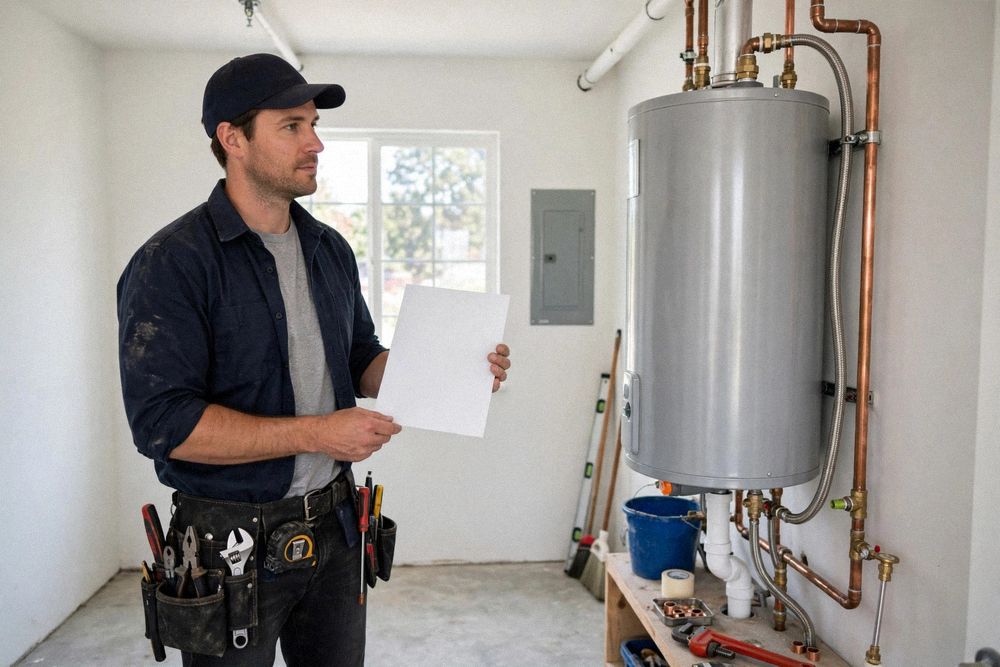
Yes, in most cases. A water heater replacement in Nampa usually needs a plumbing permit from the City of Nampa Building Department, and the work is inspected after it is done. This page states that rule plainly, and it also states what we could not verify: the City's own residential permit bulletin was not found in this research, so the rule below comes from Nampa plumber pages and the City's published guidance, not from a City bulletin quoted word for word. Check with the Building Department before you start.
The Short Answer
A repair needs no permit. A replacement does. That is the line.
Fixing a leak, replacing a broken fixture, or swapping a failed part such as a thermostat, an element, or a thermocouple is a repair. Emergency leak repairs are exempt from permits. A like for like fixture swap generally needs no permit either.
Replacing the whole heater is a new installation, and it needs a permit and an inspection. The City of Nampa issues plumbing permits separately from building permits, and water heater replacements are on the list of work the City permits: new plumbing, fixture relocations, water heater replacements, sewer and water service connections, backflow devices, and gas piping.
If you are unsure which side of the line your job falls on, one call to the Building Department settles it. Do not guess, and do not let a plumber guess for you.
Which Jobs Need a Permit
The permit you need depends on the job. Here is how Nampa plumbers describe it.
A same for same water heater replacement needs a plumbing permit. The new unit must meet current code, including a working T and P valve, a discharge pipe, a drain pan where the code calls for one, and an expansion tank if the home has a closed system.
Converting from a tank to a tankless gas water heater needs a plumbing permit and a gas permit. A tankless unit burns far more gas at full fire than a tank unit, and the gas line usually needs upsizing. That gas work is permitted and tested on its own.
Installing a heat pump water heater needs a plumbing permit and an electrical permit. A heat pump unit needs a dedicated 240 volt, 30 amp circuit, enough air volume around it, and a condensate drain. The electrical work is permitted separately.
Relocating a water heater to a new spot needs the full permit stack: plumbing for the new water connections, gas if the unit is gas fired and needs new piping and venting, and electrical for an electric or heat pump unit.
A new installation in a new build or an addition needs a permit and an inspection as part of the larger job.
Who Issues the Permit
Inside Nampa city limits, plumbing permits come from the City of Nampa Building Department. The City enforces the 2017 Idaho State Plumbing Code, and permitted work is inspected against it. The City's own commercial guidance says a permit is required when any electrical, plumbing, or HVAC work is performed, and that fees are based on the value of the work under the fee schedule adopted by City Council.
Outside city limits, in unincorporated Canyon County, permits and inspections usually run through Idaho DOPL instead. Your address decides which office issues the permit.
The City requires permitted work to be done by a state licensed journeyman plumber working for an Idaho licensed plumbing contractor, and the plumber pulls the permit as part of the job. That is the standard practice in Nampa: you do not pull the permit yourself. The plumber doing your job applies for it, pays the fee, and books the inspection.
What the Permit Covers
A permit is not just a fee. It buys an inspection, and the inspection is what protects you.
On a water heater replacement, the inspector checks the venting, the temperature and pressure relief valve and its discharge pipe, the drain pan where one is required, the gas piping test where one applies, and the related code items. If something is wrong, the inspector flags it and the plumber fixes it before the job is signed off.
Permit fees are based on the value of the work, under the fee schedule adopted by City Council. A national guide puts a typical permit fee at 50 to 200 dollars, but that is a national figure, not a Nampa figure. The City sets its own fees, and they can change. Ask the Building Department or your plumber for the exact fee on your job.
DOPL permits expire after 365 days from the purchase date or the last inspection, and can be renewed for one more year on approval and payment of a 65 dollar renewal fee, under IDAPA 24.39.20, Rule 500. City permit terms can differ from DOPL terms, so confirm the expiry and renewal rule with the Building Department when you apply.
How to Check Whether Your Job Needs One
Three steps, in order.
First, ask your plumber in writing whether the job needs a permit and which permits it needs. A straight answer names the permits: plumbing, gas, electrical, or a combination. A vague answer is a warning sign.
Second, confirm it with the City of Nampa Building Department. Tell them your address, the type of heater you have now, and the type you want to install. They will tell you which permits apply and what the fee is. This step costs you one call and removes all doubt.
Third, make sure the permit is actually pulled before the work starts, and that the inspection is booked after it is done. Ask your plumber for the permit number. A permit that is never pulled is the same as no permit at all, and it can cause trouble when you sell the home.
What This Means for You
A permit adds a step and a fee to the job, but it also adds a second pair of eyes. The inspector checks the venting, the relief valve, and the gas piping. Those are the three things that can hurt people if they are done wrong. A job done without a permit skips that check.
A permit also protects you when you sell. A buyer, a home inspector, or an insurer can ask whether the water heater was replaced with a permit. A permitted install with a passed inspection is easy to show. An unpermitted install is a question you have to answer, and it can delay a sale or a claim.
If a plumber tells you a replacement needs no permit, ask them to show you the rule in writing. If they cannot, call the Building Department. The cost of one call is nothing next to the cost of redoing the work.
Questions About Water Heater Permits in Nampa
Do I need a permit to replace a water heater in Nampa?
In most cases, yes. A water heater replacement usually needs a plumbing permit from the City of Nampa Building Department, and the work is inspected after it is done. A tank to tankless change needs a gas permit too, and a heat pump unit needs an electrical permit as well.
Does a repair need a permit?
No, in most cases. Fixing a leak, replacing a broken fixture, or swapping a failed part such as a thermostat or an element is a repair, and emergency leak repairs are exempt from permits. A like for like fixture swap generally needs no permit either.
What happens if work is done without a permit?
The work is not inspected, so no one checks the venting, the relief valve, or the gas piping. If the City finds out, it can require the work to be opened up, corrected, and inspected. An unpermitted install can also cause trouble when you sell the home or file an insurance claim.
How long does a permit take?
That depends on the job and the City's workload. One permit guide puts a typical approval time at about three business days, but that figure was not verified against the City in this research. Ask the Building Department for the current timeline when you apply.
Check the Permit Before the Work Starts
A water heater replacement in Nampa usually needs a plumbing permit, and the plumber doing your job should pull it and book the inspection. Confirm it with the City of Nampa Building Department before the work starts. Read our page on the Idaho plumbing code at /idaho-plumbing-code-water-heater-nampa/ to see what the inspector checks, and our page on Idaho plumbing licences at /idaho-plumbing-licence-nampa/ to see who is allowed to do the work.
Our Service Area
We serve Nampa and the towns around it. Pick your area to see water heater repair there.